
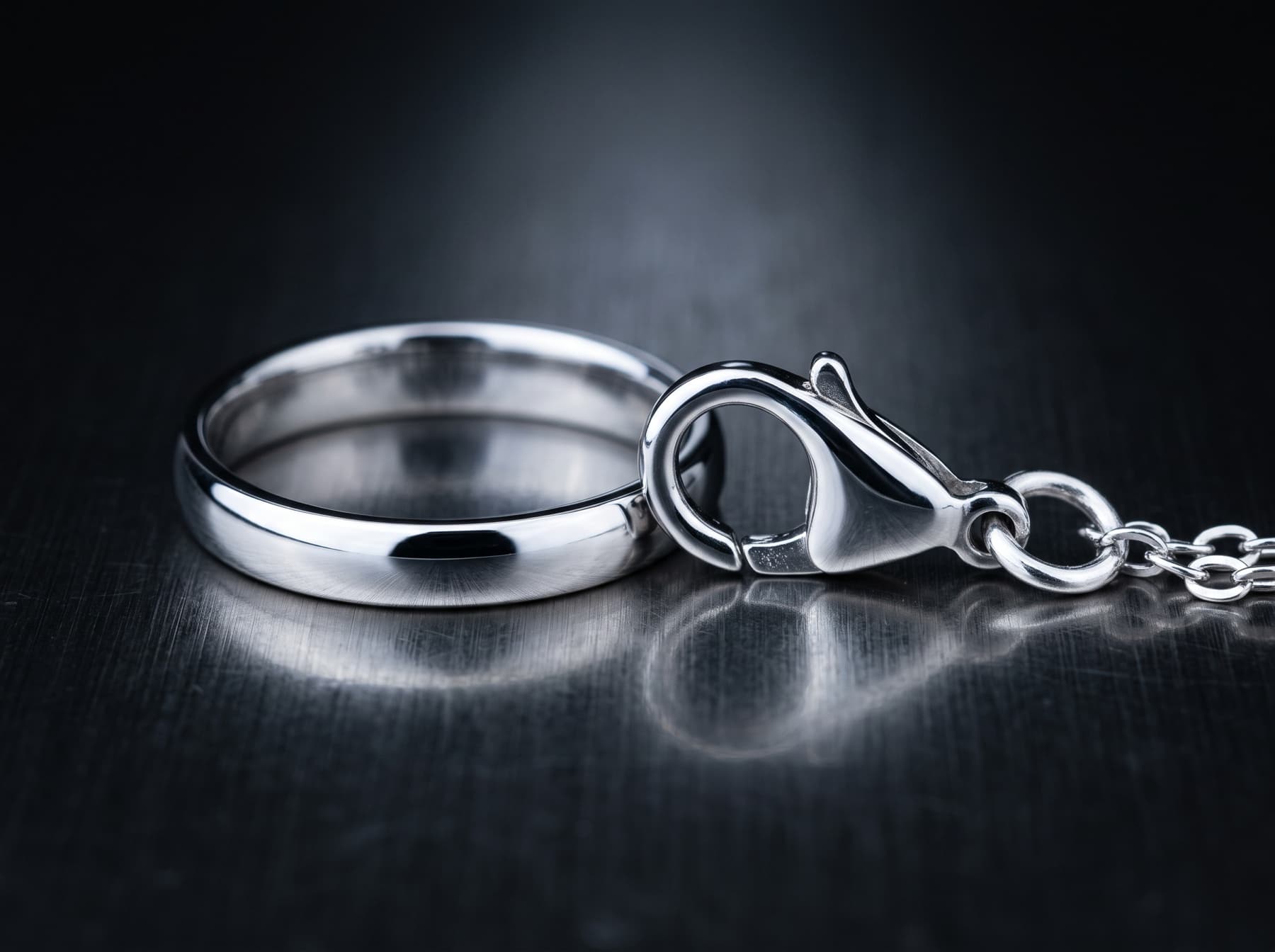
Platinum plating deposits a bright, silvery-white layer that never tarnishes, resists nearly every acid and chemical, and stands up to wear that would dull softer metals. When a piece has to look flawless for decades or survive a punishing environment, platinum is the answer.
The process electro-chemically deposits a thin, uniform layer of pure platinum onto a base metal. Because platinum is one of the densest and most chemically stable metals known, the finish is exceptionally hard, corrosion-proof, and biocompatible. It carries a naturally white color that stays bright without the periodic re-plating that white gold requires.
Typical applications
- Luxury jewelry and watch components that must stay bright for life
- Medical and dental parts where biocompatibility is required
- Electrical contacts and sensors exposed to corrosive conditions
- Laboratory and chemical-handling components
- Any part where a permanent, maintenance-free white finish matters
Properties & benefits
Permanent white finish
Bright, permanent white that will not tarnish or oxidize — no periodic renewal required.
Chemical resistance
Outstanding resistance to acids, chlorine, and industrial chemicals.
Hardness and heat tolerance
Very high hardness and wear resistance for a decorative metal, with a melting point near 3,215°F, so it holds up under heat.
Biocompatible
Hypoallergenic and biocompatible — safe for skin contact and medical use.
FAQ
Frequently asked questions
Both are bright white and corrosion-proof. Rhodium is more reflective and is applied as an ultra-thin flash; platinum can be built thicker, is more ductile, and is better suited to functional and heavier-wear applications.
Relatedjewelry · medical devices · research scientific · electroplating vs pvd · choosing a gold plating service
Pricing
Platinum work starts at our standard $500 minimum. Because platinum spot pricing drives most of the cost on larger surface areas, we quote each platinum job firm and per project after a photo review rather than at a flat per-square-inch rate. See pricing details.
Get a QuoteSend us a photo of your item.
Most quotes take one photo and one business day. Text a picture to (760) 458-3299 and we'll take it from there.