
A hard, bright white finish that performs like the more expensive precious metals at a lower material cost. Palladium resists oxidation, solders cleanly, and holds up under repeated electrical contact — which is why it shows up everywhere from connectors to fine jewelry.
Palladium plating deposits a thin white-metal layer that prevents oxide formation and provides excellent wear resistance. It is a member of the platinum group of metals and behaves as a functional substitute for gold in most electronics work and for rhodium in many decorative applications. It is also naturally hypoallergenic.
Typical applications
- Electrical contacts and connectors, especially point-contact and sliding-contact designs
- Plating over ceramic insulators in connector assemblies
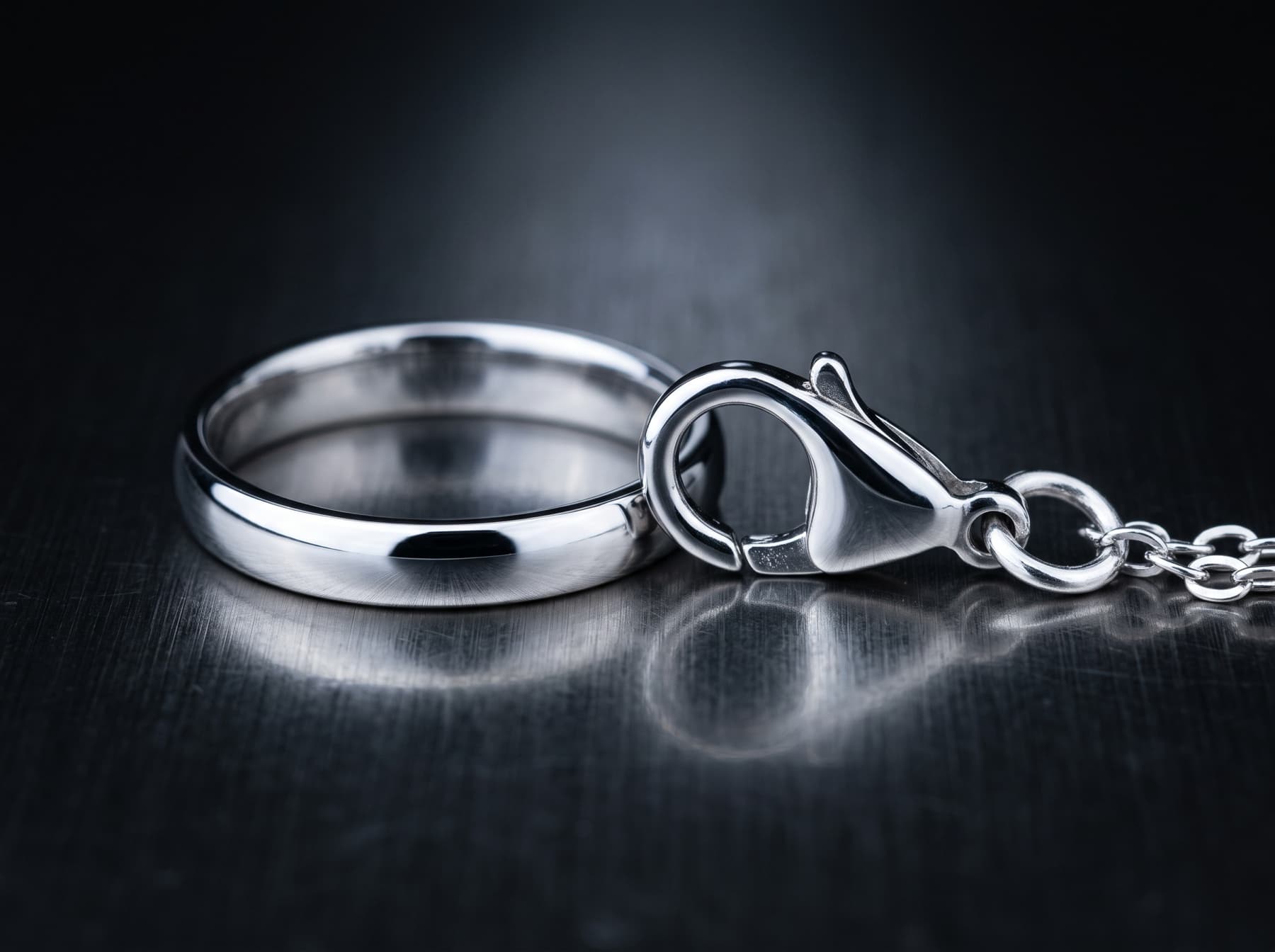
- Hypoallergenic white jewelry and wearables
- A functional, lower-cost alternative to gold in general electronics
- Applications needing wear resistance without rhodium's brittleness or cost
Properties & benefits
Oxide-resistant white finish
A bright white surface that prevents oxide formation on contacts and decorative pieces alike.
Exceptional hardness
Knoop hardness up to roughly 400 — harder than cobalt-hardened hard gold, which tops out near 200.
Solderable
Excellent solderability using standard gold soldering procedures, with a melting point near 2,830°F.
Value
Lower material cost than gold, platinum, or rhodium for comparable performance in most applications.
FAQ
Frequently asked questions
In most general electronics applications, yes. It offers comparable solderability and better hardness. Gold remains preferred where its specific conductivity or color is required.
Relatedelectronics · jewelry · gold plating for electronics · nickel underplating
Pricing
Palladium work starts at our $500 minimum and is quoted firm after a photo review. On larger parts, palladium spot pricing influences the final number, so precious-metal jobs are quoted per project. See pricing details.
Get a QuoteSend us a photo of your item.
Most quotes take one photo and one business day. Text a picture to (760) 458-3299 and we'll take it from there.